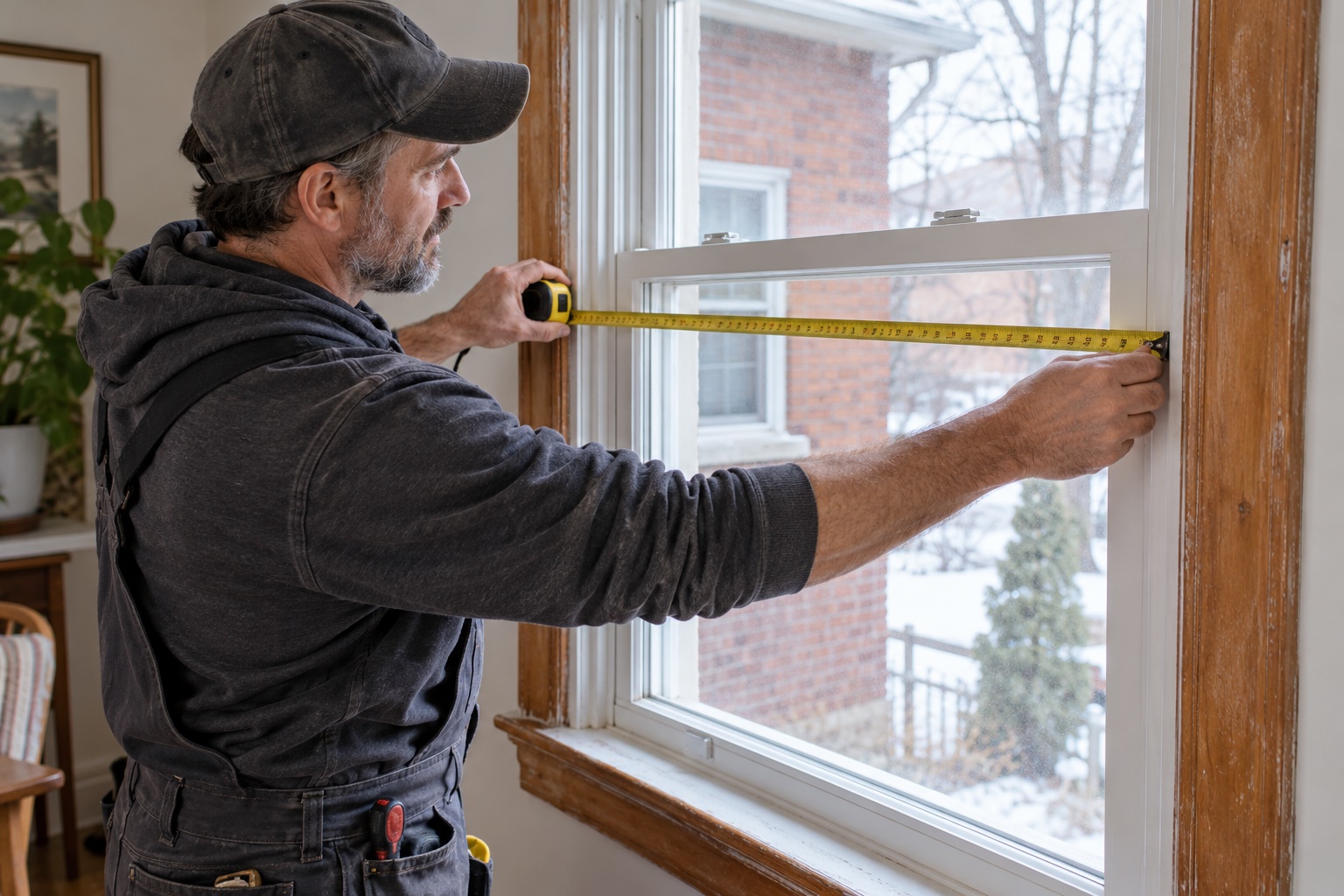
A window decision starts with what is happening in the room. Describe the symptom before shopping for a replacement: a draft, difficult operation, damaged frames or condensation.
Write down the problem.
Note which openings are affected and when the issue appears. Take photographs and record whether you see water, damaged finishes or difficulty opening and closing. A product selection alone cannot determine the cause of a problem in your home.
Compare the whole assembly.
Natural Resources Canada explains that the U-factor describes heat loss through the window assembly. Use its window guidance to understand performance terms. Confirm the exact model and certification being proposed, rather than comparing a brand name alone.
Ask about the installation scope.
- Will the existing frame stay, or is a full replacement proposed?
- What will happen to interior trim, exterior finishing and any damaged surrounding material?
- How will the opening be checked and the perimeter detailed?
- Which measurements, opening style, glass and hardware are specified?
- Who will confirm any local permit or safety requirements?
Understand condensation before deciding.
Health Canada identifies condensation on cold surfaces as one possible moisture source. Record when it occurs and seek a site assessment if the cause is unclear. Replacing a window does not, by itself, diagnose ventilation or moisture issues.
Your next step
Add each opening, symptom and unanswered question to your brief. Ask every contractor to quote the same product and installation details, or explain the differences.
Plan your window project
Sources & further reading
Primary sources checked October 30, 2026. Local requirements and individual project conditions can differ.