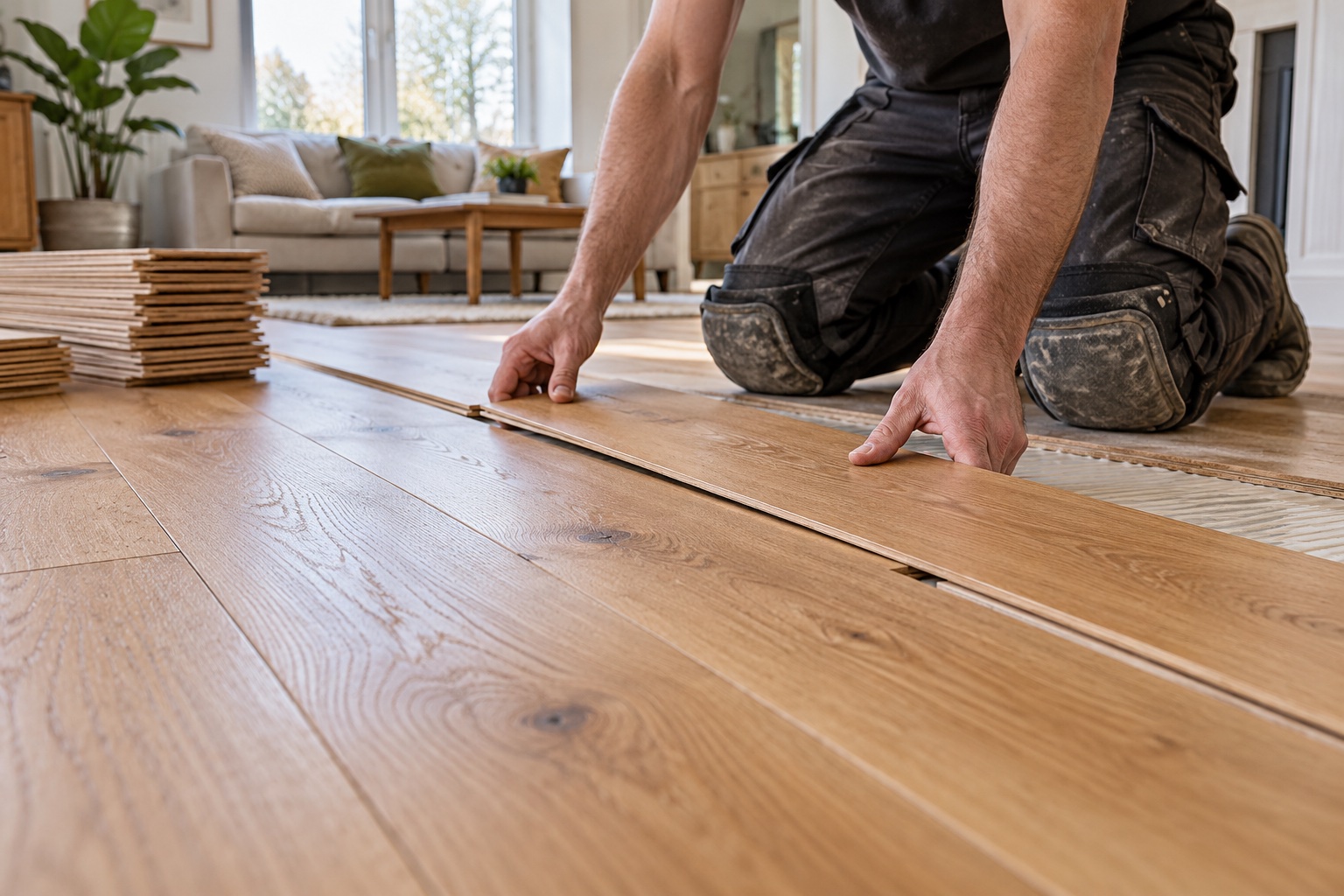
A floor sample tells you how a surface looks. Your brief should also explain where it will go, how the room is used and what must happen before it can be installed.
Start with the room.
List the daily demands: entry traffic, pets, rolling chairs, stairs, spills and cleaning routines. Record transitions to adjacent rooms and whether doors, appliances or trim may need adjustment.
Compare a complete proposal.
Ask each installer to describe removal, disposal, subfloor assessment, preparation, underlay, transitions and baseboards. Then record the product’s exact name and installation instructions. Do not assume two similar-looking products have the same requirements.
Ask for evidence on the product.
- Which rooms and installation methods does the manufacturer permit?
- What are its substrate and moisture requirements?
- Which care products and cleaning methods are recommended?
- What does the written warranty cover and exclude?
- How will damaged boards or tiles be repaired later?
Investigate moisture before covering it.
Health Canada advises resolving the source of moisture rather than simply covering affected materials. If there is dampness, staining or a recurring musty smell, have the cause assessed before choosing a new finish.
Turn choices into a brief.
Photograph the current floor, measure the area as a starting point and list the adjoining rooms. Ask the installer to verify quantities and conditions before ordering. Keep preferred products separate from requirements that are still unconfirmed.
Plan your flooring project
Sources & further reading
Primary sources checked October 30, 2026. Local requirements and individual project conditions can differ.