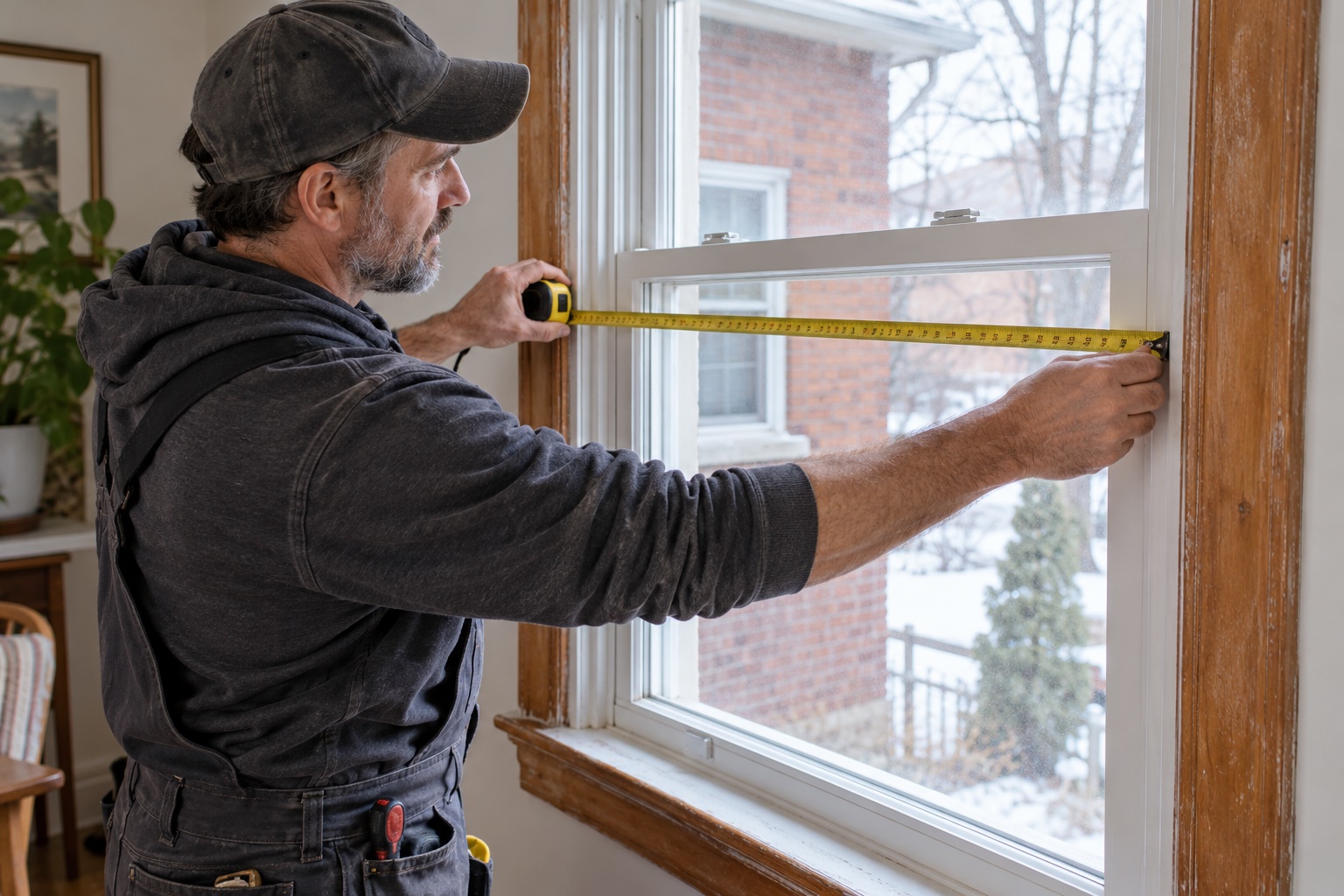
Give every window its own diagnosis
Do not begin with the age of the windows or the number a salesperson wants to replace. Begin with the problem you need to solve. A window that will not latch, one with moisture between sealed panes and one that leaks during wind-driven rain can require different work.
Make a window schedule. Number the openings on a simple floor plan and record the room, approximate size, operating type and concern. Note when the problem appears: during rain, cold weather, cooking, strong wind or ordinary opening and closing. Take photographs before wiping away a stain or condensation.
This record changes the conversation. Instead of asking “What would new windows cost?”, ask “Which component has failed, what evidence supports that conclusion, and what can be retained?” Request a repair option where the frame remains serviceable, then compare replacement against that specific alternative. A house-wide package should follow the condition assessment, not replace it.
Find where the draft actually enters
Check whether the moving sash closes squarely and locks without force. Examine the weatherstripping for gaps, damage or sections that have pulled away. Look at the joints between the window, trim and adjacent wall. Record the location of an apparent leak rather than assuming the glass causes it.
Natural Resources Canada identifies repair, air-leakage control and improvements such as storm windows among the ways to improve existing window performance. Its window efficiency guide is a useful starting point for the repair discussion.
Ask a service contractor whether hardware adjustment, compatible weatherstripping or repair of a perimeter joint addresses the actual defect. Do not indiscriminately seal drainage openings. If the air pathway is within the surrounding wall or the opening, replacing a sash alone may leave that pathway unresolved. Have the proposed work identify where the air seal will be made and how it connects to the wall.
Locate the condensation before interpreting it
Moisture on the room-side surface is different from persistent fogging inside a sealed glass unit. First establish which surface is wet. Note indoor conditions and whether curtains or blinds isolate the glass from room air. A single photograph without that context cannot identify the cause.
NRC research explains condensation in terms of surface temperature and the dew point of adjacent air: colder window surfaces can collect moisture even when another part of the room does not. Its study of window condensation also distinguishes the behaviour of the window from conditions elsewhere in the building envelope.
Persistent moisture between the panes of an insulating glass unit warrants a glass-unit assessment. NRCan's window upgrade guidance identifies replacement of the glazing unit as the corrective approach for a broken sealed unit. That does not automatically require removal of an otherwise sound frame. Ask for the glass-unit option and its warranty in writing.
Separate a local repair from a failing assembly
Have the assessor examine the sash, main frame, sill, operating hardware and the surrounding opening. Is deterioration confined to a repairable component, or does it affect the support and shape of the assembly? Can replacement parts be obtained? Will the repaired window close, lock and shed water as intended?
Water stains require particular attention. Request an explanation of the likely entry path and what investigation is needed to confirm it. A stain below a window is a location, not a complete diagnosis. Ask who will assess flashing, surrounding cladding, joints and concealed damage.
When reviewing replacement, clarify whether the quote retains the existing frame or removes it. Ask what the installer will be able to inspect in each approach and what remains hidden. A simpler installation is not automatically wrong, but the retained parts must be sound and compatible with the proposed work. Put interior trim, exterior finishing and concealed repairs on the quote rather than leaving them to an installation-day discussion.
Read performance values alongside the room
If replacement is justified, compare the exact models and configurations being offered. Ask for the whole-window performance values, not an isolated claim about the centre of the glass. Keep size, operating type and glazing configuration visible in the comparison.
NRCan's ratings guidance explains U-factor as a heat-loss measure, solar heat gain coefficient as the fraction of solar heat transmitted, and Energy Rating as a combined measure involving heat loss, solar gain and air leakage. A lower U-factor means less heat transfer; the solar-gain decision still needs the room's exposure and use.
Tell the supplier which rooms overheat, where winter comfort is poor and whether exterior shading is possible. Ask them to explain the glazing choice for those conditions. Do not accept “triple pane” as the complete specification. The frame, spacer, coatings, opening style and installation also belong in the product and assembly discussion.
Buy an installation scope, not just a window
A strong product specification cannot stand in for a clear installation proposal. Ask how the installer manages rainwater at the opening, insulates the gap, creates the interior air seal and restores the finishes. Request a simple drawing or marked-up detail if the written explanation remains vague.
NRCan warns that poor installation can produce drafts, condensation or water leakage even with an energy-efficient product. Its windows, doors and skylights guidance places installation alongside product choice.
Clarify what happens if the opening is damaged when exposed. Who documents it, who prices the repair and who authorizes the change? Also ask how the installer protects occupied rooms, handles disposal and demonstrates operation at handover. Product warranty and installation warranty should be identified separately, with a named contact for problems. The contract should make it possible to understand who responds if the window itself works but the surrounding opening leaks.
Stage the work around actual priorities
Where several windows are serviceable, ask for a room-by-room priority plan rather than assuming the entire house must be changed together. Start by resolving active water entry and unsafe or unusable operation. Then assess comfort, energy performance, appearance and the convenience of combining work.
Coordinate a window project with planned siding, insulation or interior repairs. Ask the designer or installer how those future layers will connect to the opening. A detail that is convenient today can become awkward if another renovation changes the wall depth or exterior drainage path.
Finally, compare complete alternatives: repair the existing assembly, replace a glass unit or component, or replace the full window and its installation details. Use the same finish-restoration assumptions in each price. The best decision is the smallest scope that reliably solves the diagnosed problem while fitting the next stage of the house.
Before you move forward
Put it into practice.
Save your priorities and questions in a project brief you can download and keep.
Build your project brief
Sources & further reading
Primary sources checked October 30, 2026. Local requirements and individual project conditions can differ.